Contributor’s Note: Things in LA are, if anything, only much more intense than they were when the city made headlines across the world due to civil unrest and violently repressive ICE raids (USA State-Sanctioned kidnappings and murder). This past week, ICE did what they were always going to inevitably do: they murdered their first civilian, a farm worker in Camarillo. The raids — and the resistance — are still ongoing and intensifying daily. With this in mind, and the unfathomable budget increase ICE is in the process of receiving, I’ve decided to make this interview series once every other week instead of weekly for the foreseeable future. Frankly, it’s hard to find the time with everything taking place in LA. But also, for the authors’ and editors’ safety, I prefer to have a couple of weeks between each interview for now to better gauge where things stand with the constantly growing and evolving rise of overt US fascism.
This week’s interview features Mona Swan LeSueur! She’s a trans, mixed-race author and performer. You may remember her from such strange films as Cavemen on a Train and Space Monkeys on Ice. She tends to focus on surrealist horror/sci-fi in her storytelling.
I first met her years ago at BizarroCon, and I always enjoyed the small moments I got to share with her there. And this interview is no exception.
Andrew: Mona, first, would you please tell me a little about your background and how that has influenced your own writing?
Mona: I grew up a mixed-race kid with a white mom in a Mormonville town in the desert. I spent most of my life disconnected from my father and that side of the family, so I frequently got questioned by my schoolmates with a “what are you?” Most of my life, I’ve felt stuck and lost. It is very isolating, and I always struggled to connect with who I really was. Then I transitioned, found both chosen family and my father’s side of my family. As a result, much of my writing ends up focusing on people who are desperate to find a better life.
A: I really appreciate how you use your lived experiences to create characters who desperately struggle to improve their material conditions. It’s something I try to do with characters in my own work. Actively pursuing this idea is always relevant, but right now, it feels especially pertinent. Do you see your own writing as a form of political resistance, or do you view your work as an author and your work as an activist as separate endeavors?
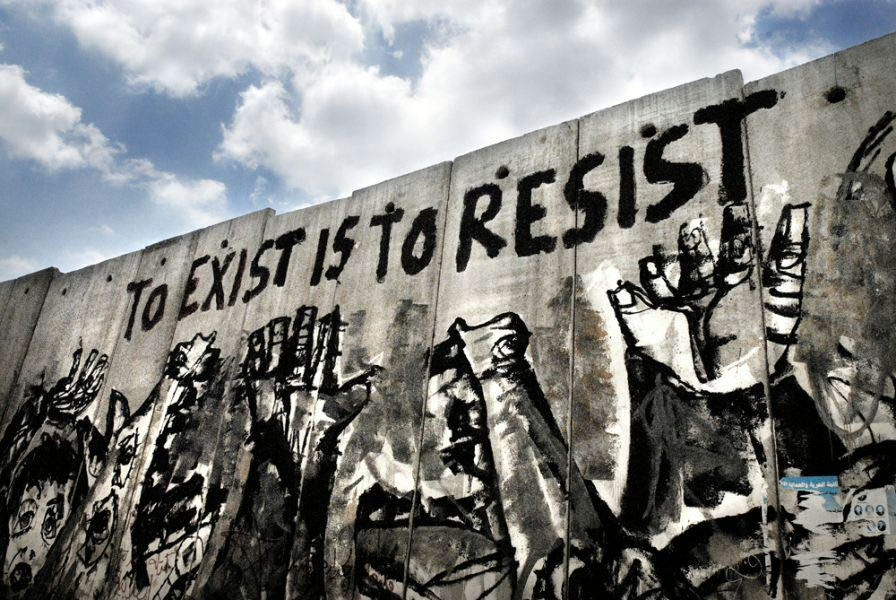
M: My mere existence is an act of political resistance, so everything I do becomes an extension of that, whether I like it or not. Which can be both frustrating and freeing. On the one hand, I’ve seen individuals get blasted to high-hell for some minor “mistake” they made online just because they happen to be trans, and it is easy to want to retreat at the sight of any resistance. But on the other hand, if folks are going to persecute me no matter what, I might as well get weird with it and live as authentically as possible.
A: Three cheers for weird! And for real, I admire how you’re able to turn the bigotry you experience from the small and weak-minded, fear-based ignoramus fucks into something authentically radical. How important is it to you to incorporate your politics into your writing, and how do you balance the story as its own standalone creature with the story as a tool of resistance?
M: This mindset of living my life in an authentically weird manner extends to my writing as well. If, no matter what I do, people want me to die, why should I give a shit if they hate what I write? My work is inherently about those who struggle to live authentically and seek a better life, which often involves overcoming societal and institutional obstacles. But to answer the second half of your question, it’s all intertwined. There is not one without the other.
A: Absolutely. Given where you’re writing from, it’s hard to see how you’d even be able to pull off writing an authentic and raw story without it being inherently political by societal design. With that in mind, I love how openly and boldly you embrace this dynamic. Since its inception, the bizarro genre has always been viewed as underground, outsider literature. How do you think its counterculture nature (where just about anything goes) can inspire the genre into being an outlet where books of resistance flourish?
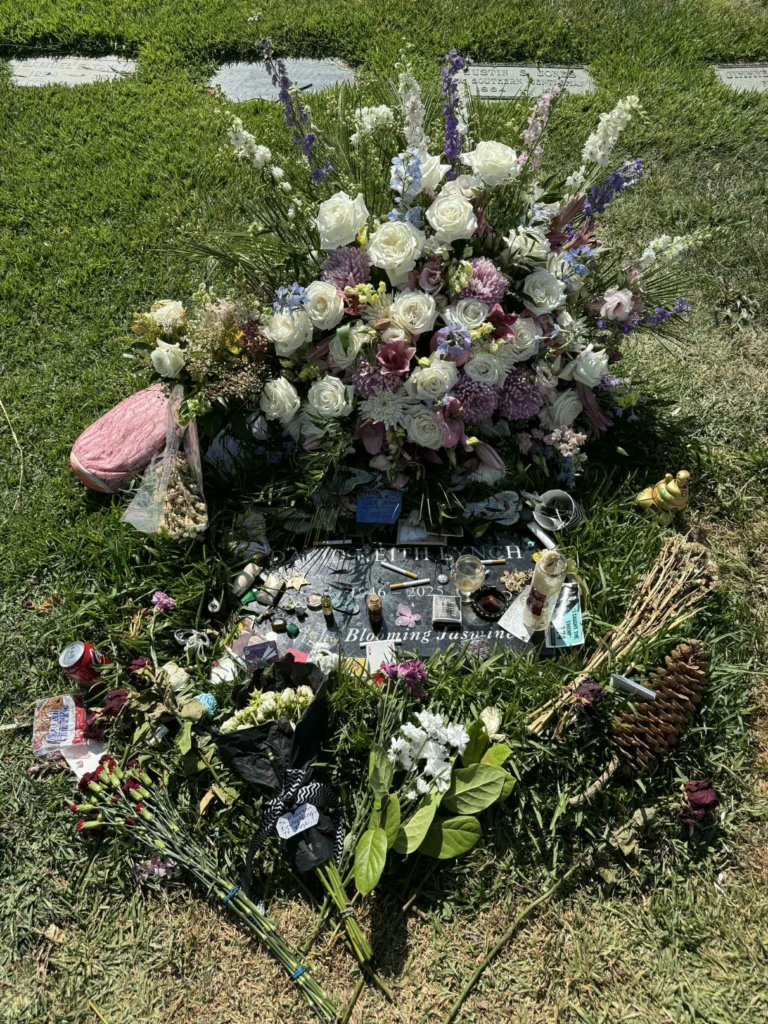
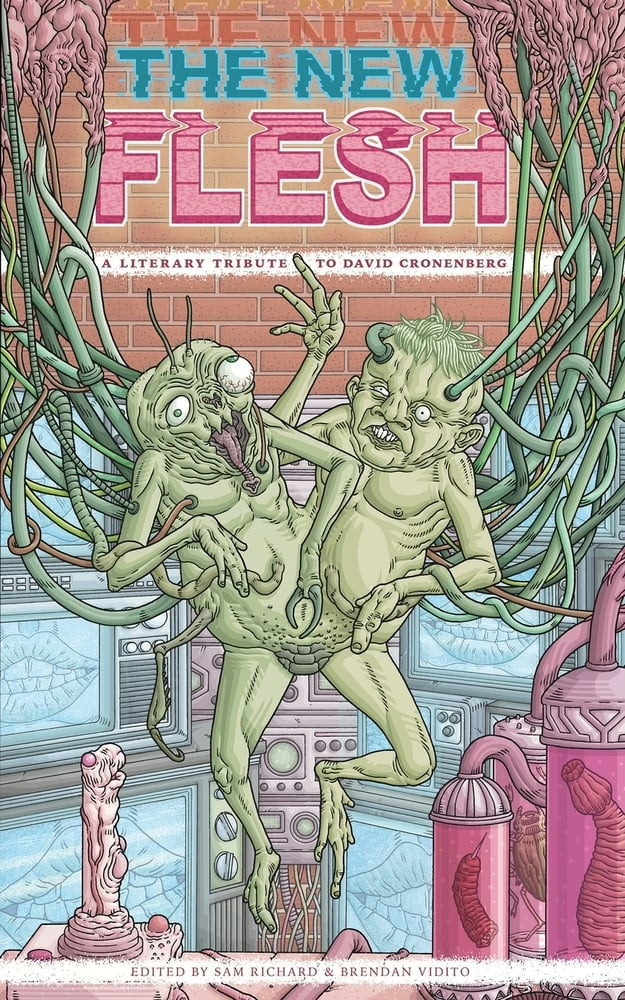
M: With the recent passing of David Lynch, I think more and more about how there isn’t enough weird art made by weird people. And the stuff that does get made does not get the attention it deserves. However, I think more and more that people are realizing that we can’t just wait around and expect change to happen. Naturally, a space where just about anything goes is an ideal place for folks to refine their messaging and be heard.
A: Thank you so much for your time and your insights, Mona. It’s a pleasure to reconnect, and I’m so grateful for the opportunity to share your work and your insights with the bizarro community. I can’t wait to read whatever story/stories you’ve been working on as of late!
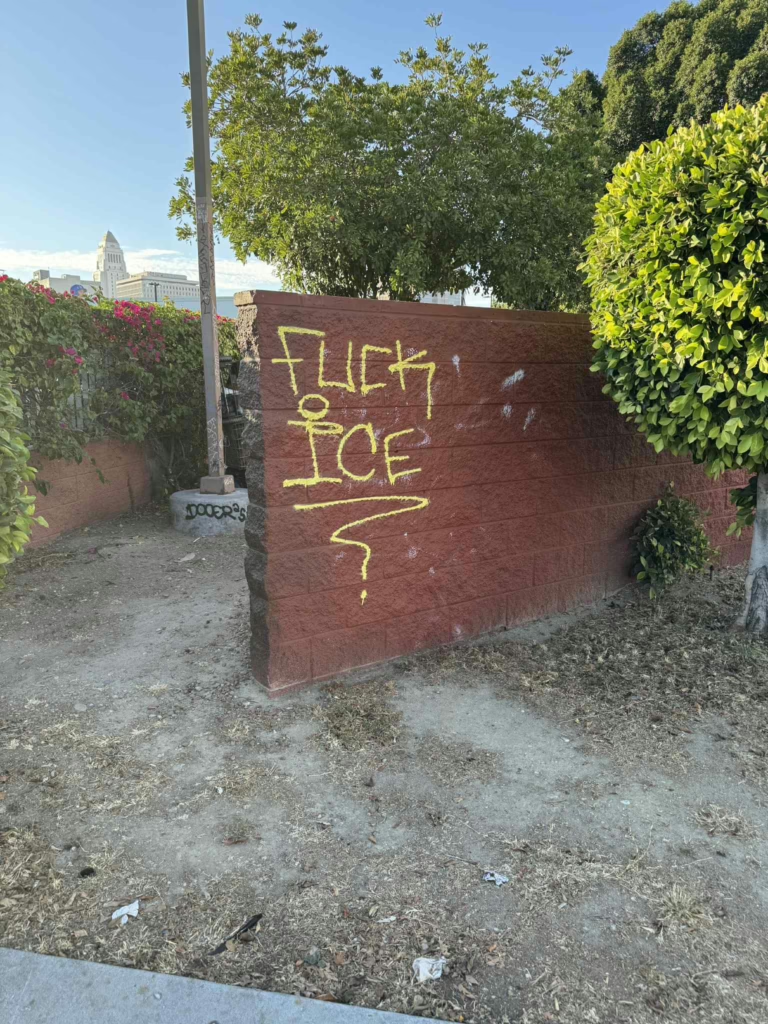
That wraps up another week of Bizarro Books as Resistance! I’m forever grateful to all the courageous authors who have participated so far, and I’m excited to share with you all the various interviews currently in progress. Check back in two weeks to read the next installment of the Bizarro Books as Resistance series. Until then, stay vigilant and join (or create) your local community self-defense groups. And always remember to support the freedom fighters who are risking it all by putting themselves on the front line to protect all vulnerable communities and their members. For me, one thing this means is donating to causes like Jail Support LA. Seriously, fuck Starbucks, fuck The Home Depot, fuck Amazon. Instead of giving money to these genocidal corporations, everyone who is a fan of this series, whether new or returning, should give what they can to the resistance by supporting bail funds like Jail Support LA (and if you can’t afford to, no problem! You also have time, knowledge, resources, etc… use them!).
Andrew J. Stone: Did someone just say Jail Support LA?
Andrew: Are we really doing this again?
AJS: Doing what?
A: Interviewing ourself.
AJS: Oh, fuck me! You’re right. Oops! I did it again.
A: Sure did, silly bud. And if you’re done, I guess there’s just one last thing to say…
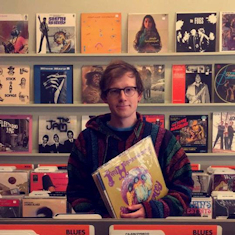
If Andrew J. Stone were a dinosaur, he’d be an Apatosaurus. If he were a superhero, he’d be Marx. If he were to have a cat, her name would be Alice, and he’d be living in a residence that allowed pets. He is the author of the novellas The Mortuary Monster (2016), All Hail the House Gods (2018), and The Ultimate Dinosaur Dance-Off (2020). His short stories have appeared in Hobart, New Dead Families, and DOGZPLOT, among other places. His work has been translated into Spanish by the Colombian publisher Ediciones Vestigio. He lives in Los Angeles, surrounded by beauty and dread.
This post may contain affiliate links. Further details, including how this supports the bizarro community, may be found on our disclosure page.